Sunday, February 5, 2017

A Life Race with your Father

While watching the Superbowl, I started to think how we talked about how fathers are the more sport-sy parent. The father-son tradition of watching a ballgame or playing catch outside supports this belief. However, what Manning fails to see is that just because his dad relates to him physically doesn't mean that he doesn't love him. His "physical" words are his way of expressing his love and feelings for Manning. Similar to how each ball thrown by a father says I love you. There are many different expressions of love which Manning is trying to demonstrate through his piece.

When you look at the whole story it is clear that the organization represents an arm-wrestling match itself. The beginning shows how Manning is always fighting and struggling to understand his father's love for him. His inability to comprehend this love shows his how he still hasn't matured. However, as the story progresses you see how Manning slowly gains strength and grows up a little. Despite the fact that he is growing up, he still doesn't understand his father and almost feels detached from him. Even though he beats his father in this middle part, it represents how the roles are reversing from the father being the protector to how Manning now has to care for his father. Finally, as the tide in the match shifts in favor of Manning, we see him maturing and how he "realize[s]...in the last hug [he said] that he loved me". This illustrates how the arms are now leaning with Manning on top. The ending, especially the last sentence, demonstrates the uncertainty that Manning has completely won as he is still doubtful about father's expression of love.

Manning's ability to replicate the structure of an arm-wrestling match in his piece makes it not only effective, but also relatable.


Sunday, January 29, 2017

Racing in the Special Olympics

I love watching sports. It's always fun to watch some good competition, the amazing players, and enjoy the entertainment. But what ever happened to all those people who weren't born as superstars? Or had some sort of birth defect? Or maybe developed some kind of disability? Why do we as people only watch the "able-bodied" play sports when there are people with disabilities doing the same thing? In fact, according to the Special Olympics "in 2013, more than 81,000 competitions took place around the world, averaging 222 games a day and nine games an hour." Despite these astounding numbers, I must admit not once have I seen any of these games on TV. Not that I don't want to, but as people we have become so concentrated on only those who can perform at the top level disability-free.

Nancy Mairs, in her piece "Disability", brings up a very similar question about how people with disabilities are underrepresented in the media. The more we focus on just the able-bodied the more ignorant we become about the number of people with disabilities that live around us. 

When kids with disabilities watch the "able-bodied" play sports, they shouldn't feel limited. Rather they need to watch other people with disabilities living out their dreams playing sports, so that they have a role-model to look up to. The narrow-minded nature of us people force this kind of change in society to be difficult. We have so long lived in our own reality where we surround ourselves with people who are "able-bodied" making us oblivious to the 1 in 5 people around us that does live with a disability. These people shouldn't be forced into a minority role in society because of something they can't control. However, they also shouldn't be sympathized with to the point where we make them feel like they need our help. Finding the right balance between sympathy and acceptance will allow these people to live their lives freely rather 
than being in the constant struggle to try and fit in. 


Sources: https://www.cdc.gov/ncbddd/disabilityandhealth/features/key-findings-community-prevalence.html
http://resources.specialolympics.org/Topics/Research/Program_Research_Toolkit/Demographics.aspx


Sunday, December 18, 2016

Passing on the Baton of Stereotypes

The Redlining video shows how even a 100 years after gaining their freedom, African Americans were still segregated and unfairly treated. Even when African Americans were successful, they could never be happy with the societal conditions around them. They were given sub-par homes at higher prices. And when Blacks started moving in, Whites moved out which basically created these "ghettos". This scenario is very similar to the scene with Lindner. The so-called "Improvement Association" was trying to purify the neighborhood of blacks, trying to keep this white safe haven. Even after the Youngers had high hopes ready to move into this house, society tried to push them back down. Lindner's pedantic tone suggests that he too holds this stereotypical view of Blacks as being primitive. 

Now imagine if Lindner comes into the Youngers house and sees a white-looking family, like that in the White Privilege Supermarket video. His whole attitude would be different. Instead of forcing them to stay in their "own community", he would actually be doing his job as part of the Welcoming Association. The difference in attitude is a clear sign of Lindner and the neighborhood's racist ways, much like how the different protocols based on color in the video. The way that Beneatha responds "(drily) Yes- and what do they do?" just furthers Lindner's beliefs about how African Americans are rash and arrogant. This fact is what stops Dr. Joy DeGruy in the video from shouting at the cashier, as she is afraid of being stereotyped by the others in the store. 

African Americans have to act so carefully which is difficult because they are often just standing up for their given rights. Even with large efforts by society, this group continues to face injustice and stereotyping. 

Sunday, December 11, 2016

Slow Down and Appreciate Life

Although money can bring you happiness, the two are not synonymous. The Diamond as Big as the Ritz shows how even with a mountain made of diamond, the Washingtons can never be truly happy because they are always so isolated and concerned over preserving their wealth. Despite the fact that they had so much money, were they "worth anything at all?" (Fitzgerald 87). Fitzgerald is trying to show how the Washingtons were built up on the outside, but had essentially a hollow center. They had such a grand showcase of wealth which makes them look almost perfect. However, as the story progresses it becomes clear how shallow and self-centered this family is. They hold no core values which Fitzgerald exposes through the course of the story.

Fitzgerald demonstrates that not only do the Washingtons use corrupt means to gain wealth, but also how they are then controlled by this corruption. They feel justified to hold aviators as prisoners and kill all their guests just to hoard all their wealth. In the end, their greed and money is what asks God for a bribe. They become so stuck in this world of money that it begins take control of their actions. The daughters, Jasmine and Kismine, show how the family has never really left this ideal isolated area as the two girls show their innocence in asking about washing clothes. Fitzgerald shows the evil nature of greed and also how money shouldn't be the center of everyone's life.

I really enjoyed reading this short story and seeing all the similarities between this and The Great Gatsby.


Friday, December 2, 2016

Running towards the Past

"He had passed visibly through two states and was entering upon a third. After his embarrassment and his unreasoning joy he was consumed with wonder at her presence. He had been full of the idea so long, dreamed it right through to the end, waited with his teeth set, so to speak, at a inconceivable pitch of intensity. Now, in the reaction, he was running down like an overwound clock" (Fitzgerald 91-92)

I really like this passage of The Great Gatsby for many reasons. It follows the scene where Gatsby and Daisy reunite after almost 5 years. This particular scene is when Nick describes Gatsby as Daisy is so overwhelmed by the mansion.

The first thing I noticed was that it shows the emotion within Gatsby. It shows how much this relationship with Daisy means to him, so much so that he is almost embarrassed or nervous to even talk to her. This points to the breaks and flaws in Gatsby, areas that his fake built-up self cannot cover. In a sense, Daisy is the "kryptonite" to Gatsby - his only weakness. This Dream, his American Dream to get rich and be with Daisy, looks to him to be in reach. Just her presence next to him makes him feel as though he has accomplished something in his life. The way Fitzgerald says "consumed ... at her presence" foreshadows that his eventual death would be the fault of his attraction for her. Gatsby takes the blame, as the so-called "savior", for Daisy's actions which leads to Wilson killing Gatsby.

Another thing I noticed was how Nick describes Gatsby to be "an overwound clock". This brings back the point about the "defunct mantelpiece clock" and how Gatsby is only in search of something from the past. His obsession with this past relationship makes him do anything to attain it. This "overwound clock" shows how he is so full of energy next to Daisy's presence, but at a point, suddenly, it will snap and lead to Gatsby's death. This also foreshadows Gatsby's death in a sense because it shows that he has reached his goal, and will now "run down". Gatsby is so stuck in the past and that is one of his biggest flaws. He fails to understand the truth in Nick's statement "you can't repeat the past". The "mantelpiece clock" is already broken which gives evidence to Nick's claim, that this relationship with Daisy is already over.


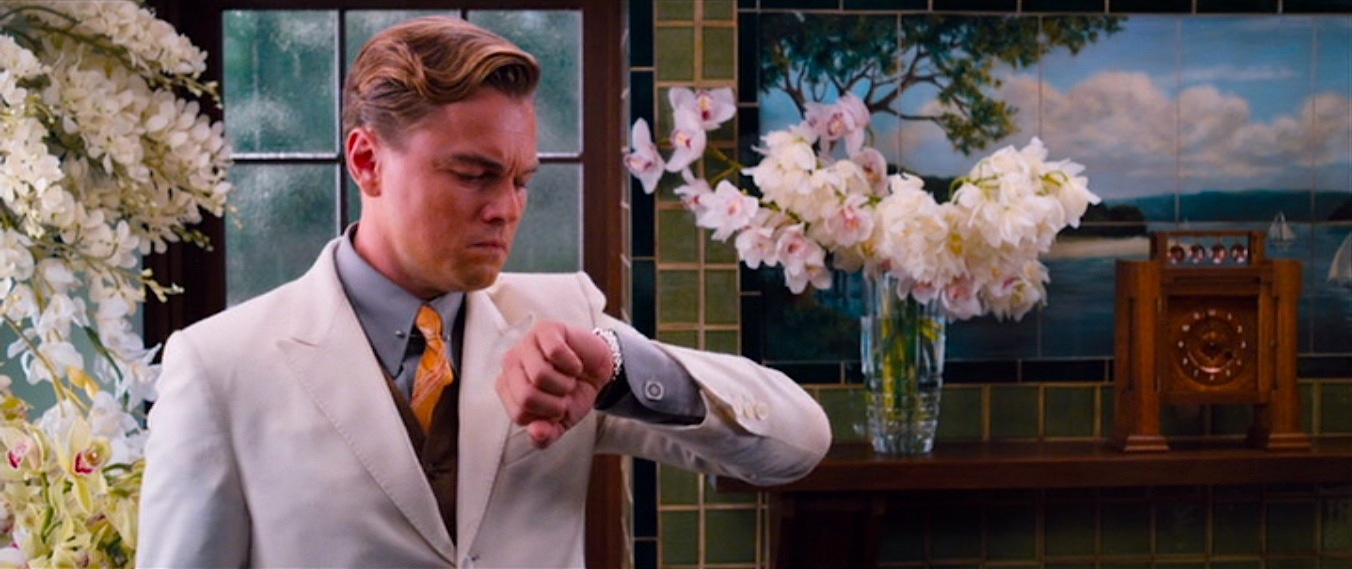
After reading the complete novel, there are so many little parts like this that foreshadow Gatsby's death which I completely missed when reading it. I really enjoyed reading and discussing this novel, and now to tie it all together WE SHOULD WATCH THE MOVIE IN CLASS! Help this cause by signing this petition.


Sunday, November 27, 2016

Speeding through Life

The 1920s or the "Roaring 20s" was the start of consumerism, new technology, and materialism. It marked the birth of one of the most important additions to society: the car. Families jumped at the opportunity of buying a car, often buying on credit - which eventually led to the Great Depression. Families and individuals were all looking for this new ability to control their lives, more specifically the "speed" and pace of their lives. The car gave families the ability to spread across the country. It made weekend trips more common. And most importantly it gave people power and the ability to show off wealth.

In The Great Gatsby, there are multiple examples of how the car symbolizes power and wealth. Nick calls Jordan a "rotten driver" when she almost gets into an accident which shows that this power consumes her. It makes Jordan want to flaunt this speed that she can obtain. The carefree nature she adopts is all to showcase that she has full control. But in reality, everyone with a car has this control which Nick realizes and questions "suppose you met somebody just as careless as yourself". Gatsby's Roll-Royce is a symbol of his wealth. He also shows how this power consumes him when he speeds through the valley of the ashes.

Today, much of this attitude about cars still exist. I see people driving 90 down Northfield or Long Lake to show off this power that the car gives them. Why does Jay Leno need so many cars that he has his own TV show for them? For many people the convenience of car is what attracts them to it which was its initial purpose. However, for many others its the power and wealth which drives them to buy it.


Monday, November 14, 2016

Jumping the Hurdles of Societal Standards

Both Toni Morrison and Kehinde Wiley make the difficult life of African Americans clear, as they depict the lives of African Americans amd compare to the ideal white standard. Morrison demonstrates the self-rejection of Pecola as a victim of white beauty standards; she constantly prays for blonde hair and "pretty blue eyes". While the black race is shown to be "ugly", the white race including Mary Jane and Shirley Temple are treated almost like gods for their beauty. Morrison uses this contrast to convey how blacks and minorities are at the hands of the white society. They are forced to conform to white beauty standards and societal standards. This is further exemplified when Morrison alludes to slavery mentioning "the master" who controls the black's beauty and in a sense their life.

Kehinde Wiley uses his paintings such as Officers of the Hussars (below) to demonstrate a very similar point. He mocks the original painting as he replaces the white man with a black man. He conveys that when we see a black man in a position of power, society has taught us to be shocked by that image. It looks so unnatural for this black man to be surrounded with such extravagance. However, when we see the original painting with the white man it looks normal to us. This goes to show how we have all fallen into this ideal white standard, making them superior to all others.  The black man is also stereotyped; he is depicted wearing the classic wife beater, baggy jeans and Timberland boots. On the other hand, the white man proudly wears his country's uniform. These standards have ingrained this divide between races to the extent where I see the black man as a thug in the streets, and the white man as a noble countrymen.


Through the use of different methods, both book and painting, Morrison and Wiley tell the story in the voice and point of view of a minority. The stark contrast created by each tells the audience the magnitude of the inequality in this world. They serve as a call to action; to shock us in a such a way as to change our perspective and seek change in society.